

 In July and August, if you ever find yourself hiking in high alpine, you’ll probably recognize the plant pictured below. That is Chamerion angustifolia, commonly known as fireweed. This prolific plant has also been called the fire follower, known to thrive after fire-related devastation. According to the Colorado Native Plant Society, it was one of the “top-producing” plants just a year after the eruption of Mount St. Helens. One plant can produce up to 80,000 seeds, making them a strong ecological competitor in alpine landscapes.
It can be easy to spot remnants of a recent wildfire. The land often looks barren, remaining trees are charred, and low laying vegetation is sparse or nonexistent. Fire, however, provides opportunity for renewal. Low-intensity fires have the ability to release nutrients in organic material, increasing soil fertility and releasing the nutrients that were previously unavailable. This can lead to favorable conditions for germination. However, the benefits of fire on soil health greatly vary depending upon the soil type, intensity of the fire, and the vegetation that is present.

Fireweed is one of the plants commonly found in landscapes after a wildfire. Photo by Madeline Perigaut.
Low intensity burns have long been understood by Indigenous communities across North America. Known as “cultural burning,” Indigenous people would often utilize low intensity prescribed burns to support the ecology of their forests. Across many Indigenous cultures, fire is medicine and the prescription of this medicine helps to restore balance and maintain abundance.
As the Colorado landscape learns to adapt to increased aridity, so must we. Adopting firewise and xeric landscaping practices is a great way to have a localized impact. While no plant is entirely fireproof, there are some options that are more firewise. The Extension Office supported by Colorado State University (CSU) is a great resource for learning about gardening practices, and they also have a useful guide for firewise landscaping. Plants that are given a low flammability score are plants that are low in resin, high in moisture retention, have a compact growth habit, and have green, herbaceous stems as opposed to woody ones.
Many Native Colorado plants are considered firewise. Native plants are better adapted to this region because of their drought tolerance and lack of a need for soil amendments. Naturally, when a plant is drought tolerant, it has a stronger ability to retain moisture, making it a firewise choice. Native plants are great additions to your garden because they also support native pollinators and provide natural habitats for the smaller garden critters. Planting natives is not only a great way to support local biodiversity, but also tends to be a lower-maintenance gardening option as they require less watering after establishing and rarely need soil amendments.
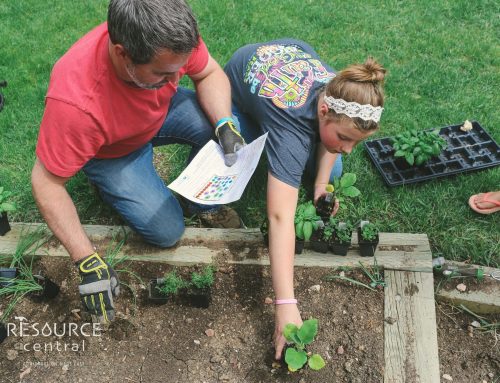
Garden In A Box is also coming to Steamboat. These water-wise gardening kits come ready to plant with clear, paint-by-number style instructions. Order your boxes starting June 17 for pickup August 8. There will also be a demonstration event on the evening of June 11 at the Yampa River Botanic Park. Click here to sign up for the Garden In A Box interest list to be notified when boxes go on sale.
There are many organizations in Colorado that are forward thinking when it comes to our drier landscapes. Plant Select is a nonprofit organization that is a collaborative effort between CSU, Denver Botanic Gardens, and professional horticulturists. Plant Select chooses species of plants that are best adapted to our changing climate. You can often find Plant Select breeds at your local plant nurseries.
The Yampa River Botanic Park here in Steamboat Springs is a great place to find xeric inspiration for your own gardens. Not only is there a water-wise garden found near the greenspace, but there is also a Plant Select demonstration garden just across the way.
Garden In A Box is also coming to Steamboat. These water-wise gardening kits come ready to plant with clear, paint-by-number style instructions. Order your boxes starting June 17 for pickup August 8. There will also be a demonstration event on the evening of June 11 at the Yampa River Botanic Park. Click here to sign up for the Garden In A Box interest list, and learn more about the options available to create a more xeric and biodiverse landscape.
Madeline Perigaut | 26 May 2025